Use this guide to narrow the choice between TOSH-1, TOSH-2, TOSH-4 and TOSH-5. Review the carrier interface, operating conditions and handling configuration together before specifying the equipment.
1. Define the Workpiece and Pallet Before Selecting the Conveyor
Begin with what the system must carry and what each station must do. Record the workpiece dimensions and weight, fixture arrangement, orientation and access needed for assembly, inspection or testing. Then define the pallet that supports them.
Provide the pallet length and width, underside contact surfaces, support points and complete loaded weight. For an existing pallet, check the underside and contact surfaces against the conveying interface as well as the published width range.
The product pages mention overlapping applications—from electronics and appliances to automotive components. Industry is useful context, but it does not determine the conveyor type by itself. Carrier geometry, load distribution and the required process are stronger selection inputs.
2. Compare the Conveying Mechanism and Platform Structure
The main distinction is the surface or mechanism that transports the pallet. Drive arrangement and handling modules are further configuration choices.
Scroll horizontally on smaller screens to compare all platforms.
| Platform | Mechanism and structure | Selection context | Load interpretation |
|---|---|---|---|
| TOSH-1 | Timing / synchronous belt Aluminum-profile frame; end drive or center drive. | Compact carriers and smaller/lighter workpiece applications. | Load-rating basis unconfirmed. Confirm the selected configuration with the factory. |
| TOSH-2 | 08BS chain Modular aluminum-profile structure with configurable chain options. | Moderate-load assembly applications and accumulation conveying. | 2,200 kg TOTAL conveyor system load capacity; not a per-pallet rating. |
| TOSH-4 | 12BS accumulation chain Heavy-duty chain-track structure for medium-to-large loads and longer conveying sections. | Accumulation and transfer through automated production lines. | 2,500 kg TOTAL conveyor system load capacity; not a per-pallet rating. |
| TOSH-5 | Roller Cantilever or double-supported rollers; chain/sprocket or bilateral helical gear drive. | Heavy-duty pallet transport, circulation and accumulation. | Load-rating basis unconfirmed; TOSH-5-GS load value also requires confirmation. |
Which Pallet Conveyor Platform Should You Consider?
TOSH-1
Compact carriers and smaller/lighter workpiece applications.
Explore TOSH-1TOSH-2
Moderate-load assembly applications and accumulation conveying.
Explore TOSH-2TOSH-4
Accumulation and transfer through automated production lines.
Explore TOSH-4TOSH-5
Heavy-duty pallet transport, circulation and accumulation.
Explore TOSH-5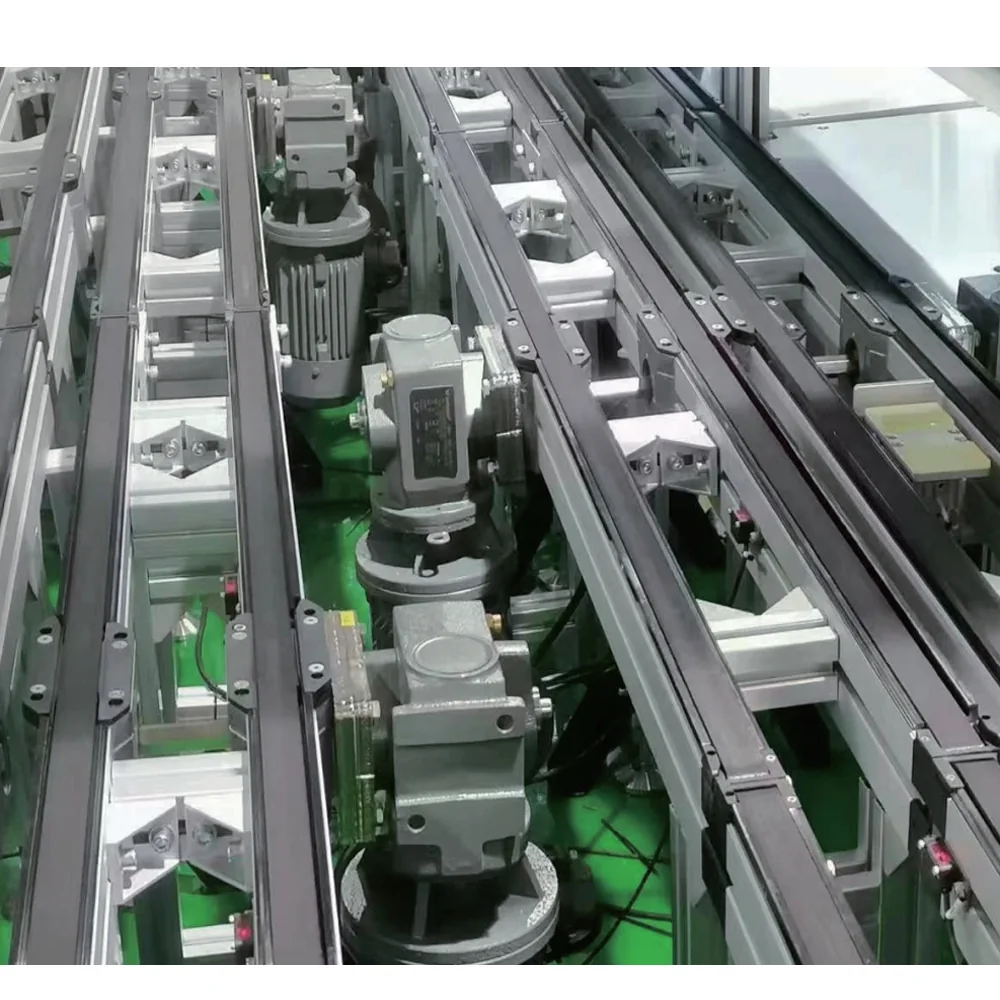
Timing belt: TOSH-1
TOSH-1 Timing Belt Pallet Conveyor uses timing belts on an aluminum-profile structure. End-drive and center-drive arrangements allow the drive location to be evaluated against the section and layout. It supports compact-carrier transport, multi-station automation and accumulation conveying. Positioning performance depends on the selected station arrangement and requires confirmation.
Chain: TOSH-2 and TOSH-4
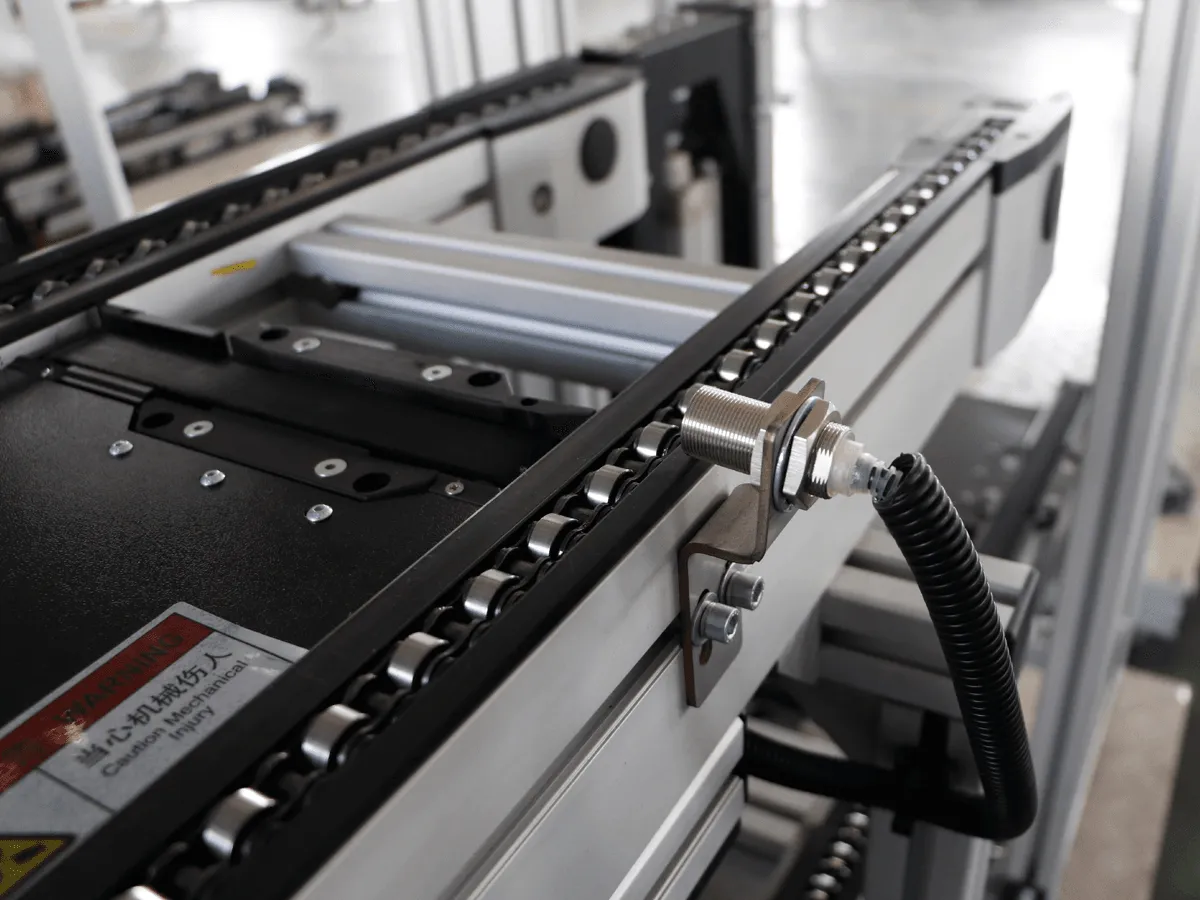
TOSH-2 Chain Pallet Conveyor uses 08BS chain and is positioned for moderate-load assembly and accumulation. Its documented chain options include steel wheel, nylon wheel, maintenance-free nickel-plated and protective-cover arrangements. Confirm which option suits the operating conditions.
TOSH-4 Heavy-Duty Chain Pallet Conveyor uses 12BS accumulation chain and is positioned for medium-to-large loads and longer conveying sections. Compare section length, loaded carriers and the required interfaces alongside the chain designation and total system capacity.
Roller: TOSH-5
TOSH-5 Pallet Roller Conveyor combines two support arrangements with two drive types. CC and GC use cantilever rollers; CS and GS use double-supported rollers. CC/CS use chain or sprocket drive, while GC/GS use bilateral helical gear drive. Match the support and drive configuration to the pallet geometry, load distribution and application.
3. Separate Individual Pallet Load From Total Conveyor System Load
Individual pallet load
The load carried by one pallet includes the pallet itself, its fixture and the workpiece. Record the heaviest complete carrier and describe how that weight is distributed. A heavy off-centre workpiece may present a different support condition from an evenly distributed load of the same weight.
Individual loaded pallet = pallet + fixture + workpiece.
This is an application input, not a capacity derived from the conveyor's total system rating.
Total conveyor system load
TOSH-2: 2,200 kg TOTAL conveyor system load capacity.
TOSH-4: 2,500 kg TOTAL conveyor system load capacity.
These figures are not maximum loads per pallet. Actual capacity depends on conveyor configuration, length, load distribution and operating conditions.
Provide the number of loaded pallets, where they can accumulate and the expected combined load. Review each section and hand-off as well as the overall system. Do not divide a system-load figure by the number of pallets to establish an allowable per-pallet rating; the load path and configuration still require evaluation.
The load-rating basis of TOSH-1 and TOSH-5 remains unconfirmed. Their published load figures should not be used as a verified per-pallet or directly comparable system rating until the factory confirms the definition and applicable conditions. TOSH-5-GS additionally has no confirmed numerical load value on its product page.
4. Check Pallet Support Across the Entire Route
Match the pallet's contact surfaces to the conveyor tracks or rollers. Review support at the start and end of each section, through transfer points and at process stations. Include the fixture and workpiece centre of gravity when considering how load reaches the conveyor structure.
For TOSH-5, the roller-support configuration and roller spacing are explicit selection inputs. Confirm that the pallet underside and its loaded support condition suit the selected arrangement. The available width range alone does not define the support needed between rollers.
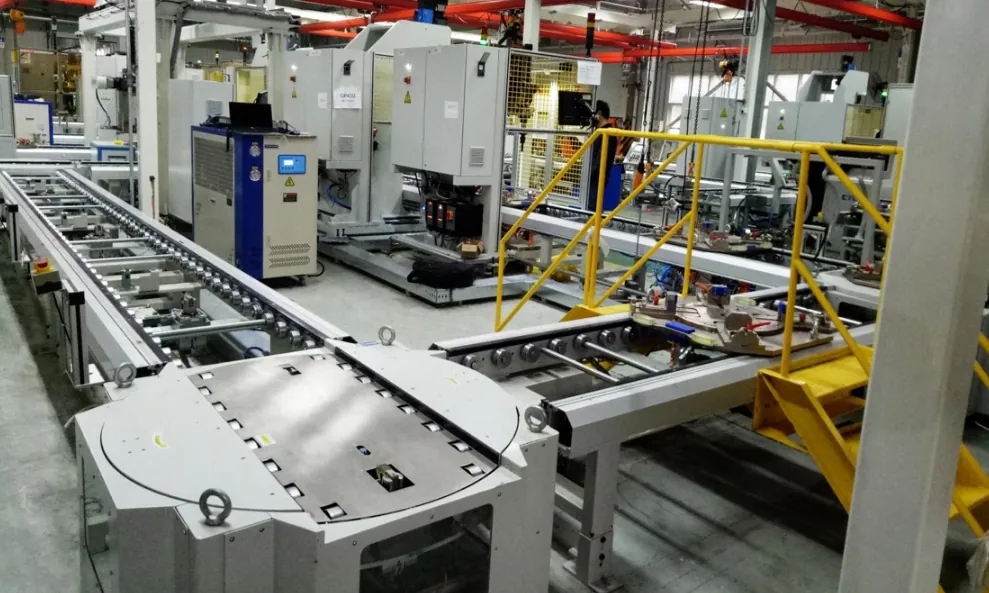
A pallet suitable for straight conveying may need a separate check at a curve, lift or transverse transfer. Do not assume that a handling module accepts the entire width or load range of its parent conveyor platform.
5. Plan the Route, Accumulation and Return Path
Map the workstation sequence, buffer locations and empty-pallet return route. Show fixed equipment, available access, conveying heights and direction changes on the layout. These details reveal where straight conveyor sections end and additional handling functions begin.
All four platforms support accumulation. Define the number of loaded pallets that may stop together, their release sequence and the combined load in each buffer zone. Confirm these conditions for the selected conveyor configuration.
Check direction restrictions early
- TOSH-1: reverse operation is described as possible with reduced conveying capacity; forward conveying is recommended. The reduction is not quantified.
- TOSH-2: forward conveying is recommended; reverse conveying requires separate application evaluation.
- TOSH-4: reverse conveying is prohibited for the standard configuration. Plan returns and direction changes accordingly.
- TOSH-5: the page does not state a reverse-operation rule; obtain confirmation for the proposed configuration.
6. Evaluate Transfer, Positioning and Process Support Separately
Transfer and direction change
Distinguish a change in travel direction from a change in workpiece orientation. A curve, transverse transfer and rotation unit address different movements. Define the pallet entry and exit direction, orientation, transfer height and release sequence at every interface.
TOSH-1 lists FC90, DC90 and DC180 curve units, LT30 lift/transverse shifting, LP30 lifting positioning, LI30 vertical lifting and RT30 rotation. The documented LT30 envelope is narrower than the full conveyor range: pallet width and length of 160–480 mm and pallet plus load of ≤30 kg. This is a module-specific limit, not a TOSH-1 conveyor load-rating definition.
The TOSH-2, TOSH-4 and TOSH-5 pages describe handling functions for evaluation but do not establish compatibility with those named TOSH-1 modules. Confirm the module model, carrier interface and load for each selected platform.
Stopping is not the same as process positioning
A pallet stop manages material flow. Process positioning establishes the carrier location required by the operation. Specify the station datum, required accuracy and repeatability, process forces and how the carrier will be supported and released. The existing pages do not provide numerical positioning accuracy or repeatability values.
A small positioning lift should not be assumed to connect conveyor levels. Define station locating movement and level-change travel as separate requirements.
7. Coordinate Travel Speed, Station Timing and Controls
Required production output depends on the full sequence: travel, stopping, transfer, positioning, process dwell and release. Conveyor travel speed alone does not establish line throughput. Review buffer needs and the timing of lifts or cross transfers alongside the station cycle.
Define machine handshakes, sensors, pallet-release logic and control boundaries before fixing the arrangement. Include fault recovery, access for adjustment and the operating environment in the inquiry. Motor power, electrical supply, environmental ratings and duty requirements need application-specific confirmation rather than assumptions based on the platform name.
8. Confirm the Complete Configuration Before Specification
Published ranges help narrow the options; they do not show that maximum length, width, speed and load can all be combined in one arrangement. Use the product pages for the current configuration information and ask the factory to confirm the proposed operating point.
- Confirm load-rating basis and applicable conditions, especially for TOSH-1 and TOSH-5.
- Confirm complete pallet dimensions, contact surfaces and support through every hand-off.
- Confirm accumulation loads, direction restrictions and selected handling-module compatibility.
- Confirm station positioning requirements and transfer timing.
- Confirm electrical, controls and operating-environment requirements.
Use the completed application review to define the operating limits for your selected platform.
9. Prepare an Engineering Inquiry
You do not need to choose the exact TOSH model first. A clear set of application inputs allows the available platforms and interfaces to be reviewed together.
- Workpiece and fixture
- Dimensions, individual weights, centre of gravity, orientation, support points and process access.
- Pallet / carrier
- Length, width, underside drawing, contact surfaces, fixture arrangement and any existing carrier constraints.
- Load cases
- Maximum complete pallet load, number and location of loaded pallets, accumulation zones and load distribution.
- Production process
- Station sequence, dwell times, process forces, inspection/testing operations and the required production cycle.
- Layout and movement
- Dimensioned layout, section lengths, conveying heights, travel directions, return route, transfers and level changes.
- Positioning and handling
- Station datum, required accuracy and repeatability, locating/support method, rotations, stops and release sequence.
- Controls and interfaces
- Machine handshakes, sensor requirements, control boundaries, fault recovery and operating conditions.
Discuss Your Pallet Conveyor Requirements
Share your carrier drawings, loads and production-line layout to review a suitable conveyor configuration.
Prepare Your Project Inquiry