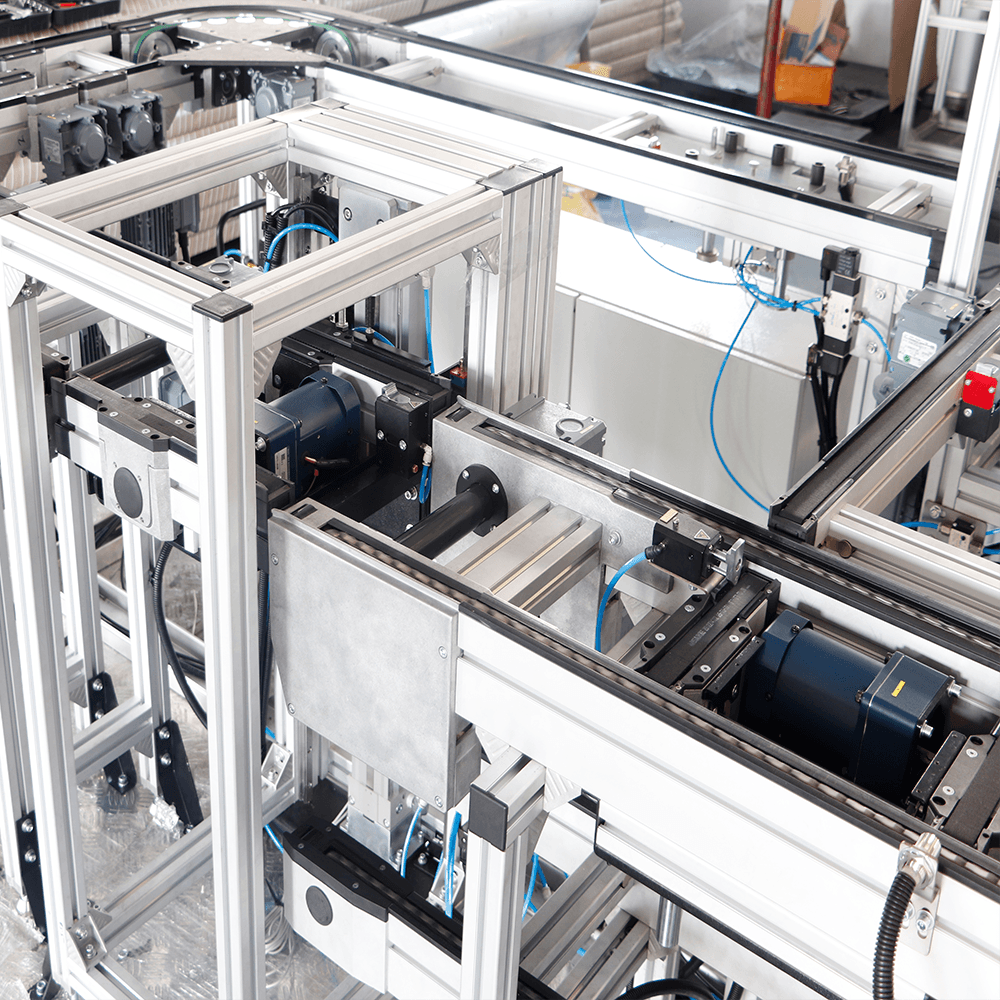
Where should pallet handling system design begin?
Start with the workpiece and carrier, then map the station sequence and pallet return path. Add cycle, positioning and interface requirements before selecting conveyor platforms or handling modules.
Is a curve unit the same as a pallet rotation unit?
No. A curve changes the conveying path; a rotation unit changes pallet orientation. Define both the travel direction and the workpiece orientation required at the next station.
Can the same handling module be used on every TOSH platform?
Compatibility is platform- and application-specific. The named modules on this overview are documented for TOSH-1. Do not extend that compatibility to TOSH-2, TOSH-4 or TOSH-5 without confirmation of carrier, load, height and control interfaces.
How should total load be specified?
Include the pallet, fixture and workpiece, and describe their load distribution. Also provide the expected accumulated load on each section. A conveyor system load reference must not be treated as a per-pallet capacity.
What is the difference between stopping and positioning?
Stopping manages pallet flow. Positioning establishes the carrier location required by the process. Define the process datum, tolerance and forces so the station can be evaluated for locating and support as well as release.
How do lifts and cross transfers affect the production cycle?
Their stop, transfer and release sequences occupy time within the route. Compare those sequences with station dwell times, pallet arrival rates and buffer requirements; the conveyor travel speed alone does not establish line throughput.
Can an existing production layout be used?
Yes. Share a dimensioned layout with equipment positions, conveying heights, access restrictions and control boundaries. Identify fixed interfaces and any areas that may be rearranged so routing and hand-offs can be reviewed together.