PALLET CONVEYOR SYSTEMS

Modular Pallet Conveyor Systems for Automated Production Lines

Toshine pallet conveyor systems use pallets or workpiece carriers to move components between assembly, inspection, testing and processing stations. Modular conveyor platforms can be combined with transfer, positioning, lifting and direction-change functions around the production process and plant layout.

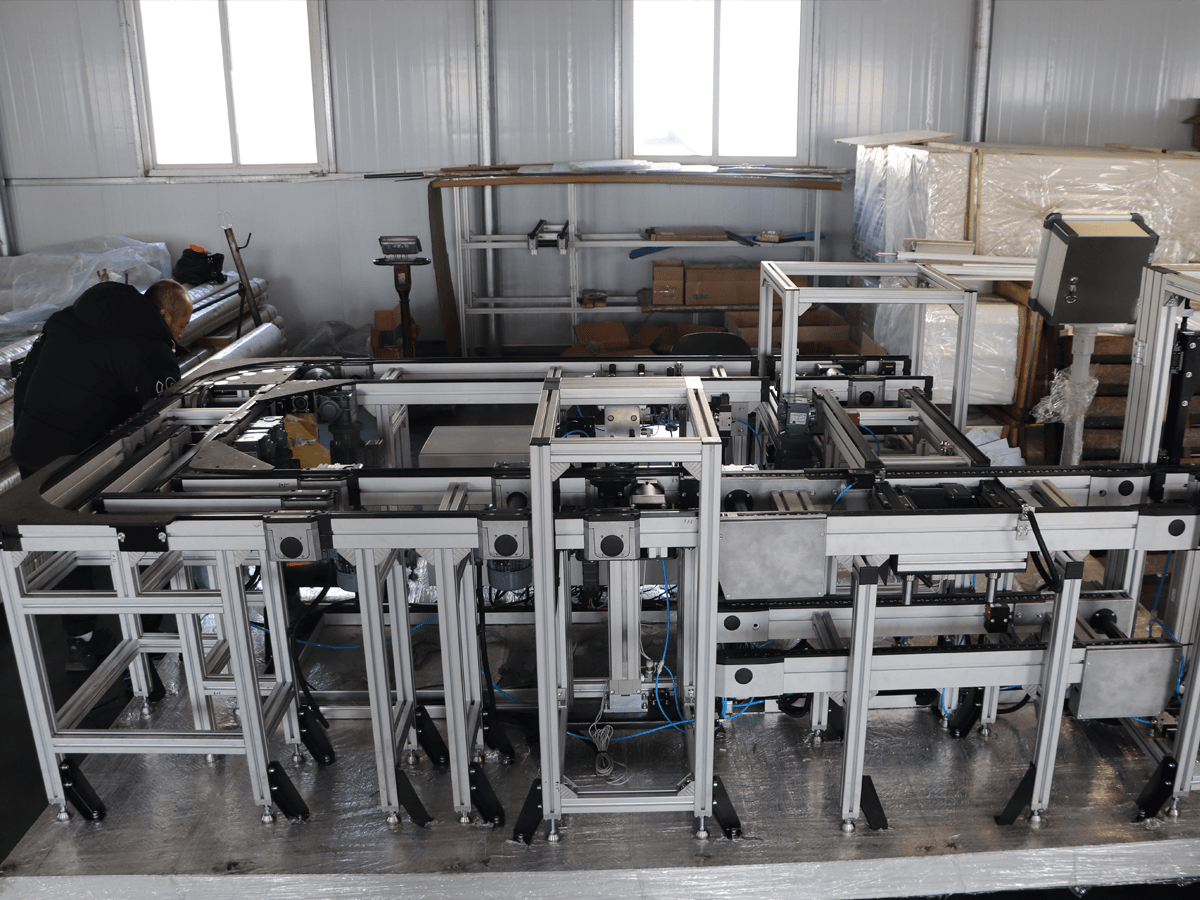
Complete pallet belt conveyor system with parallel transport tracks and interconnected production workstations

MODULAR CONCEPT

A Modular Platform for Workpiece Transfer

The pallet acts as the workpiece carrier. The conveyor system moves that carrier between workstations while functional mechanisms support route changes, transfer and positioning where the process requires them.

  • Workpiece
  • Pallet / carrier
  • Production process
  • Layout
  • Transfer direction
  • Positioning requirements

CONVEYOR PLATFORMS

Choose the Right Pallet Conveyor Platform

Different workpieces, loads, line layouts and process requirements call for different conveying methods.

TOSH-1 timing belt pallet conveyor with aluminum-profile frame and end drive
TOSH-1

TOSH-1 Timing Belt Pallet Conveyor

For smaller workpieces and production lines where clean, precise and modular pallet transport is important.

Application direction
Electronics, small components, light assembly and similar automated production processes.
Explore TOSH-1 VIEW PRODUCT
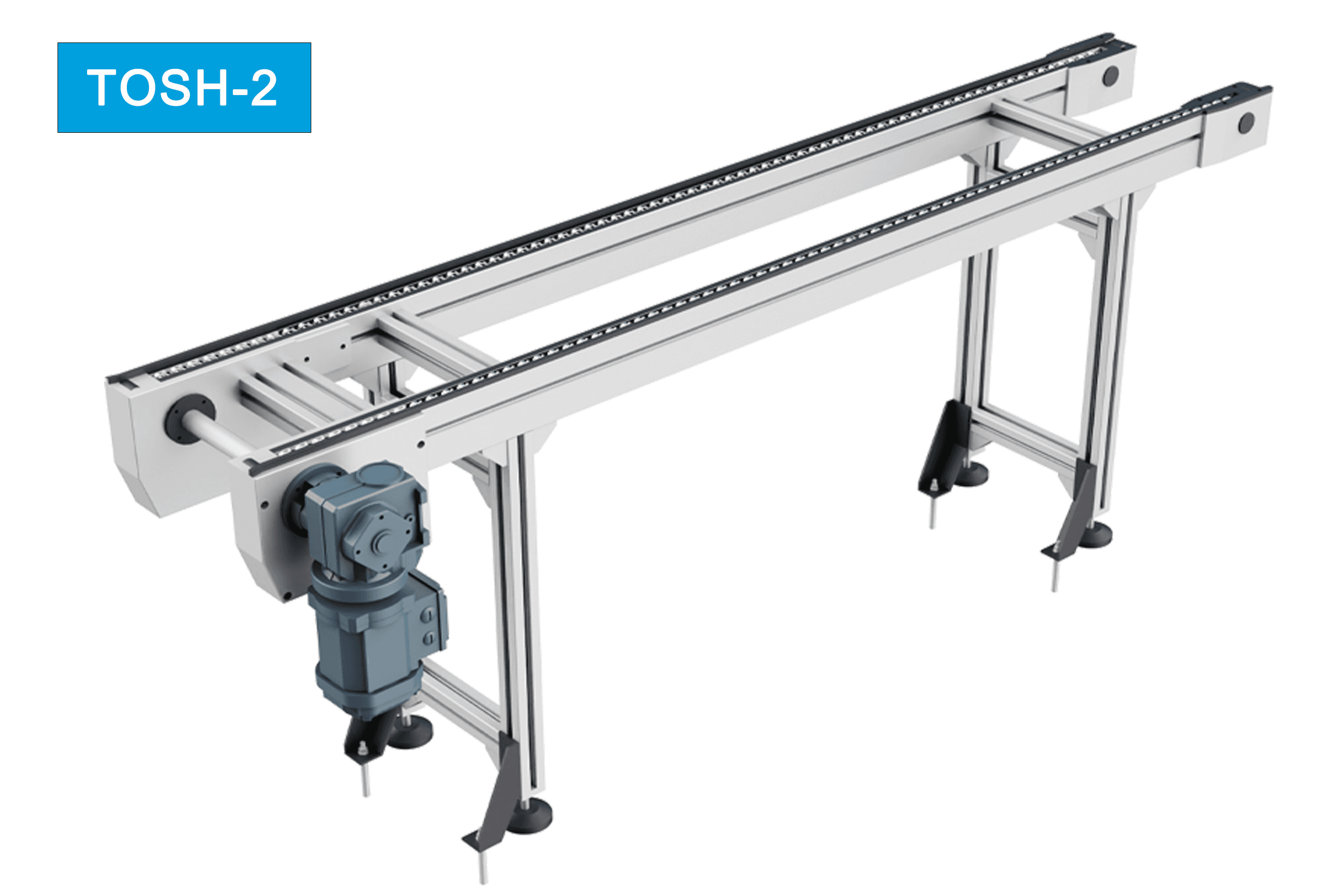
TOSH-2 chain pallet conveyor with parallel chain tracks, supporting frame and drive motor
TOSH-2

TOSH-2 Chain Pallet Conveyor

A versatile pallet conveyor platform for medium-duty assembly and workpiece transfer applications.

Application direction
Assembly lines, automotive components, appliances and general industrial automation.
Explore TOSH-2 VIEW PRODUCT
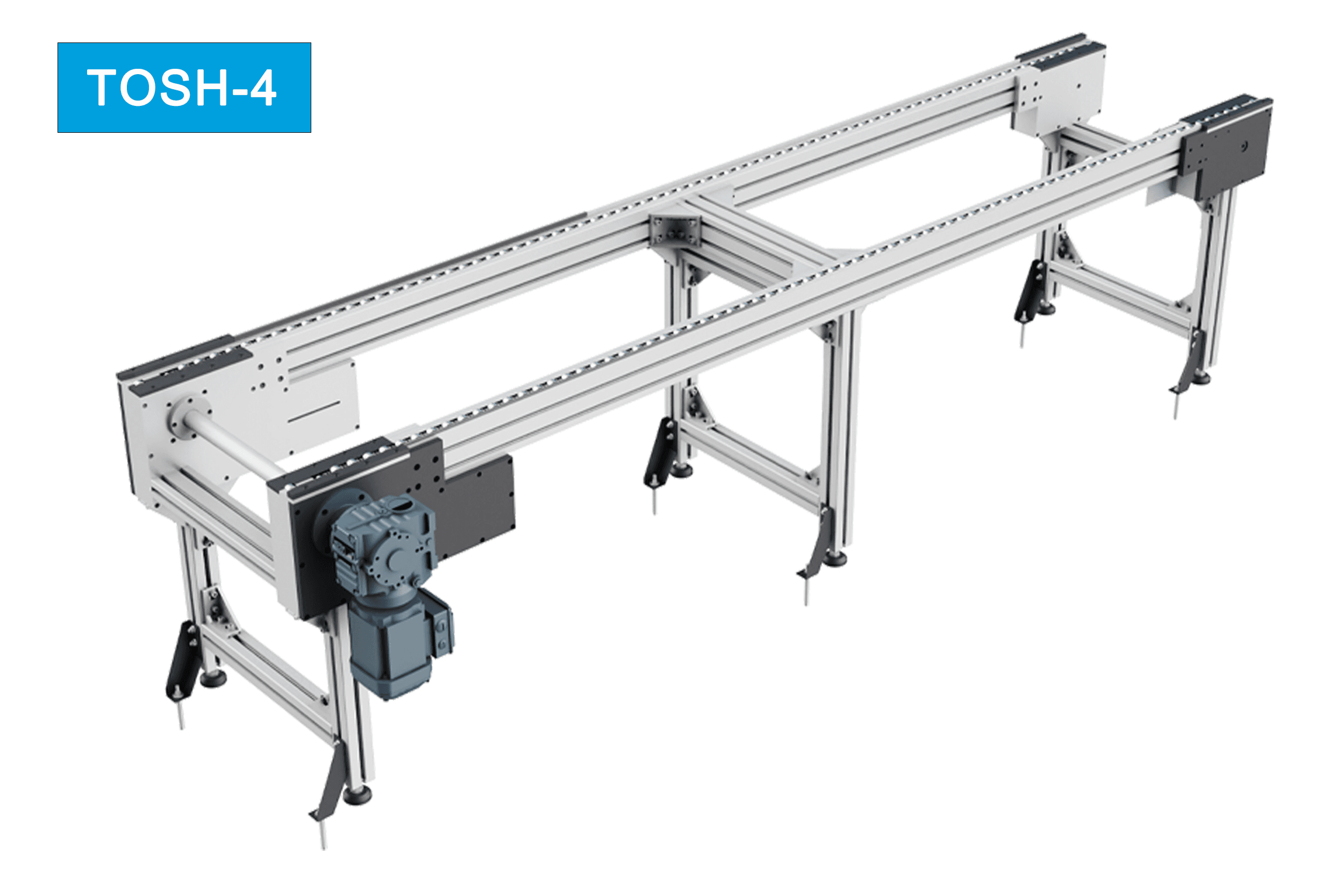
TOSH-4 heavy-duty chain pallet conveyor with chain tracks, supporting frame and drive motor
TOSH-4

TOSH-4 Heavy-Duty Chain Pallet Conveyor

For medium-to-heavy workpieces and applications requiring more robust pallet transport or longer conveyor sections.

Application direction
Automotive components, industrial assemblies and larger workpieces.
Explore TOSH-4 VIEW PRODUCT
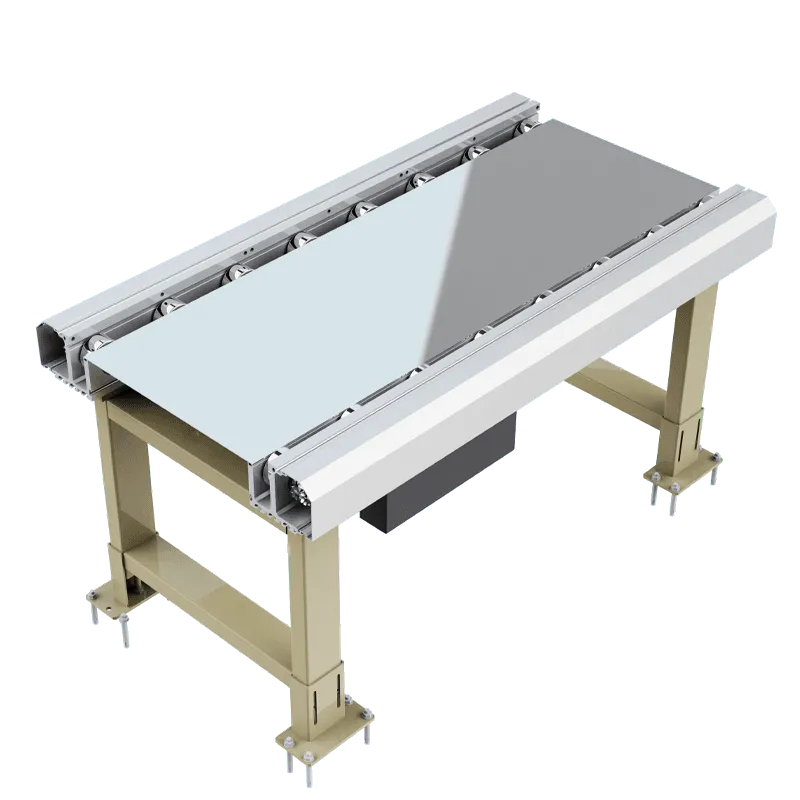
TOSH-5-CS pallet roller conveyor with visible side rollers and double-supported frame
TOSH-5

TOSH-5 Pallet Roller Conveyor

A robust pallet conveyor platform intended for heavier workpieces and demanding automated assembly applications.

Application direction
Heavy components, automotive engine or transmission-related assembly and similar industrial applications.
Explore TOSH-5 VIEW PRODUCT

SELECTION GUIDE

Compare Pallet Conveyor Platforms

PlatformConveying MethodApplication DirectionTypical Workpiece / ProcessSelection FocusProduct Page
TOSH-1Timing beltClean, precise modular transportSmaller workpieces; electronics and light assemblyCarrier interface, station sequence and positioning needsView product
TOSH-2ChainVersatile medium-duty transferAssembly lines and general industrial automationRoute, carrier interface and process sequenceView product
TOSH-4Heavy-duty chainRobust transport and longer sectionsMedium-to-heavy industrial assembliesWorkpiece weight, load distribution and transfer interfacesView product
TOSH-5RollerDemanding automated assemblyHeavier components and automotive-related assemblyPallet support surfaces, hand-offs and station positioningView product
Not sure which platform fits your application?Discuss Your Requirements

FUNCTIONAL MODULES

Configure More Than Straight-Line Transport

A pallet conveyor system can combine conveying platforms with functional modules to route, position, lift and control pallets through different production processes.

CONVEYOR PLATFORMprovides transportFUNCTIONAL MODULESsupport process movement
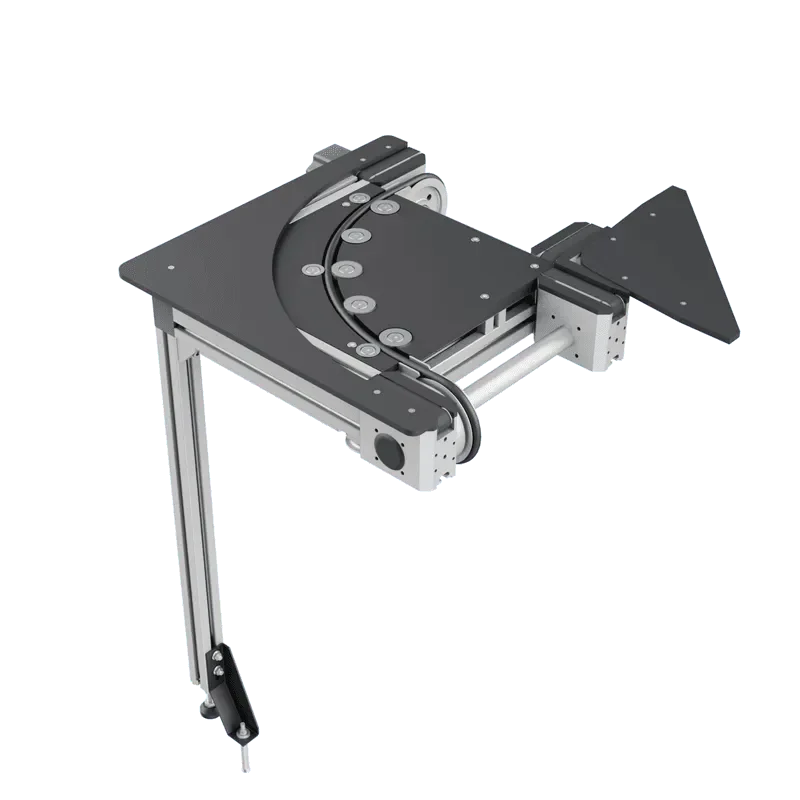
Round belt curve unit with a curved conveying path, guide rollers and support legs

Curve & Direction Change

Route pallets through changes in line direction.

  • 90-degree curve
  • 180-degree curve
  • Direction-change mechanisms
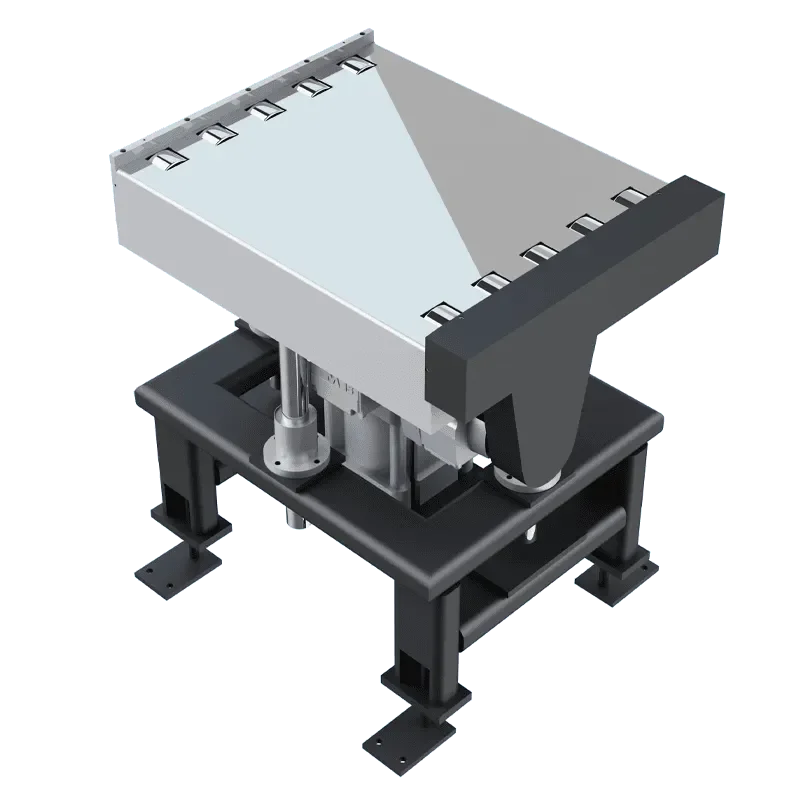
Lift and transverse transfer unit with a conveying platform above a lifting mechanism

Lift & Transfer

Move pallets between conveying directions at route interfaces.

  • Lifting and transverse transfer
  • Cross-direction transfer
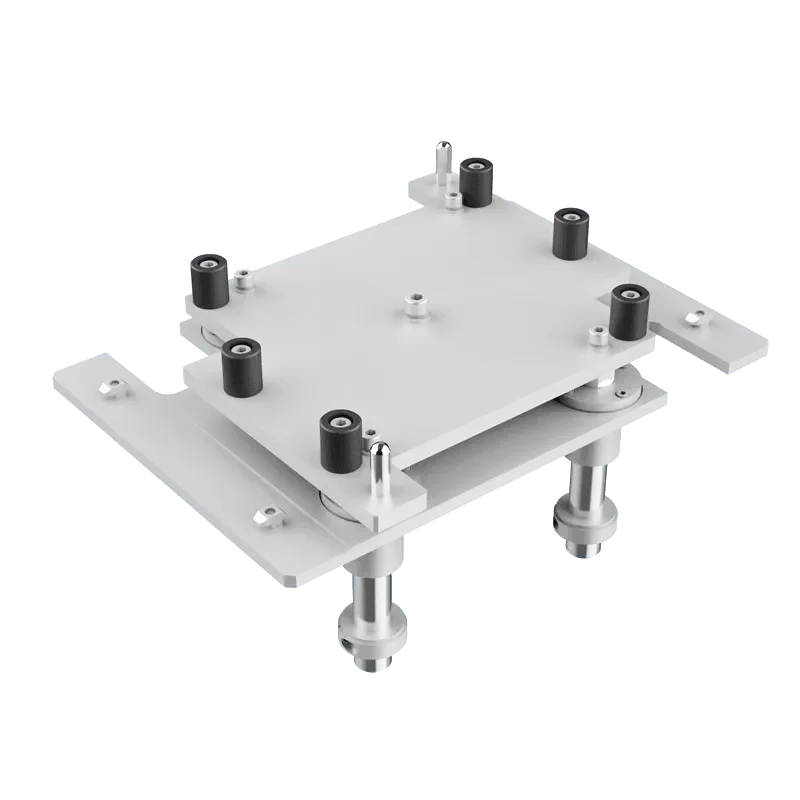
Pallet lifting and positioning unit with a locating plate, guide pins and lifting supports

Pallet Positioning

Locate and position pallets at assembly, inspection or processing stations.

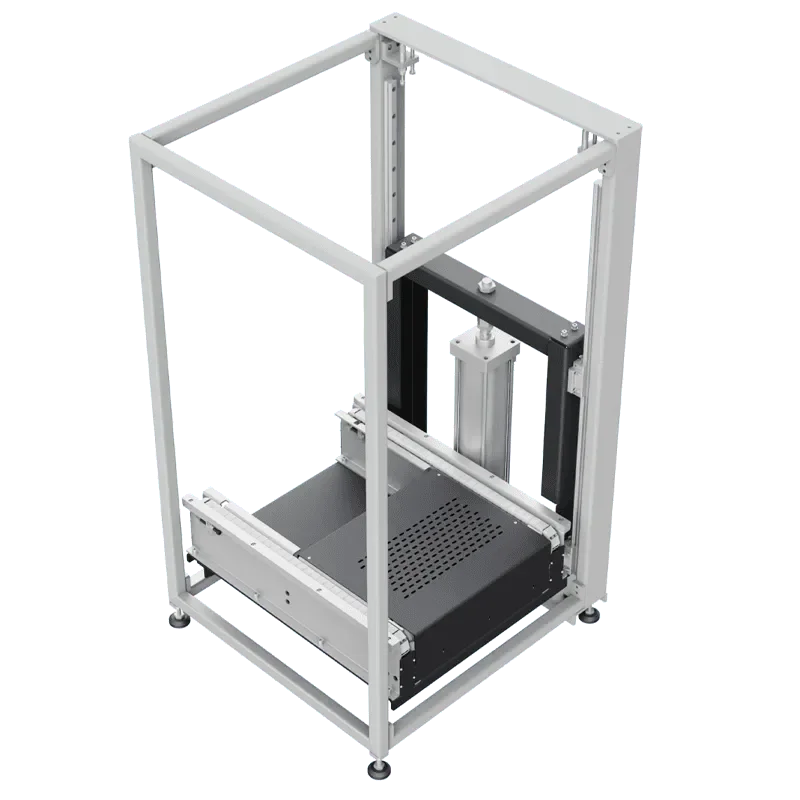
Vertical pallet lifting unit with an aluminum frame and lift platform

Pallet Lifting

Support vertical movement or process-height adjustment within the conveyor system.

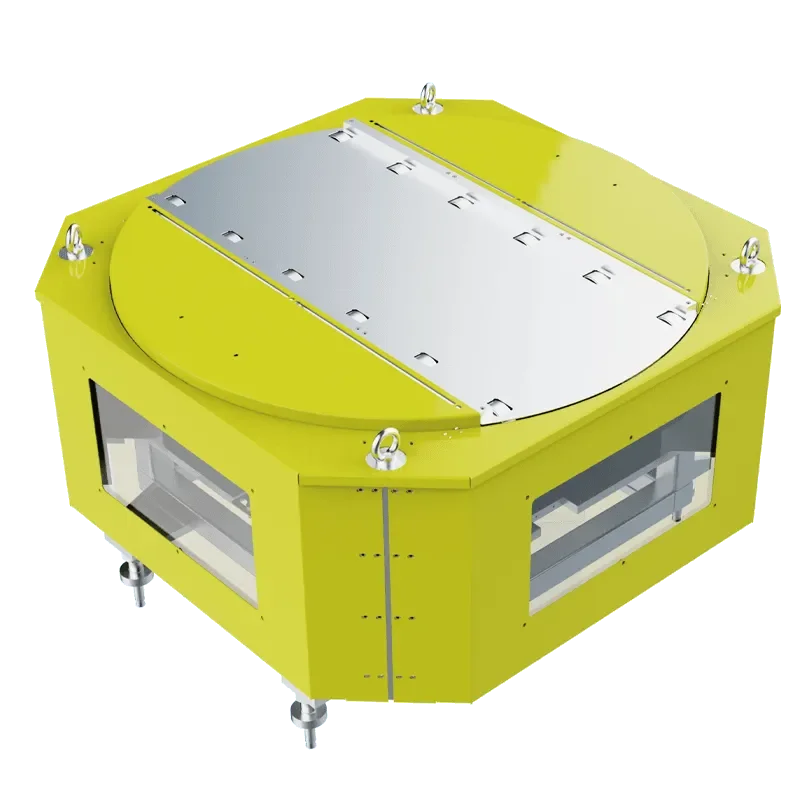
Pallet rotation unit with a circular conveying platform and yellow protective enclosure

Rotation

Change pallet or workpiece orientation where required by the process.

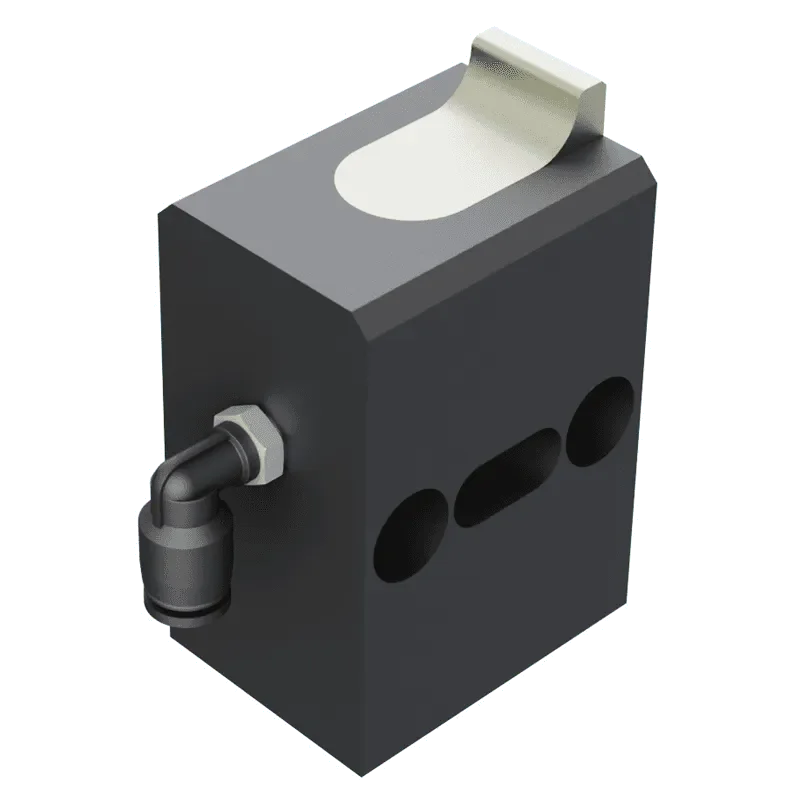
Pneumatic pallet stopper with a raised stopping head and air connection

Stops & Control Components

Manage pallet release, deceleration and buffering functions.

  • Pneumatic stopper
  • Cushioned stopper
  • Buffer stop

SYSTEM INTEGRATION

From Conveyor Platform to Complete Pallet Flow

The system is configured around the required workpiece flow, rather than treated as a collection of individual conveyor sections.

  1. Pallet / Workpiece Carrier
  2. Conveyor Platform
  3. Transfer & Direction Change
  4. Positioning / Process Station
  5. Lift / Level Change
  6. Control & Integration
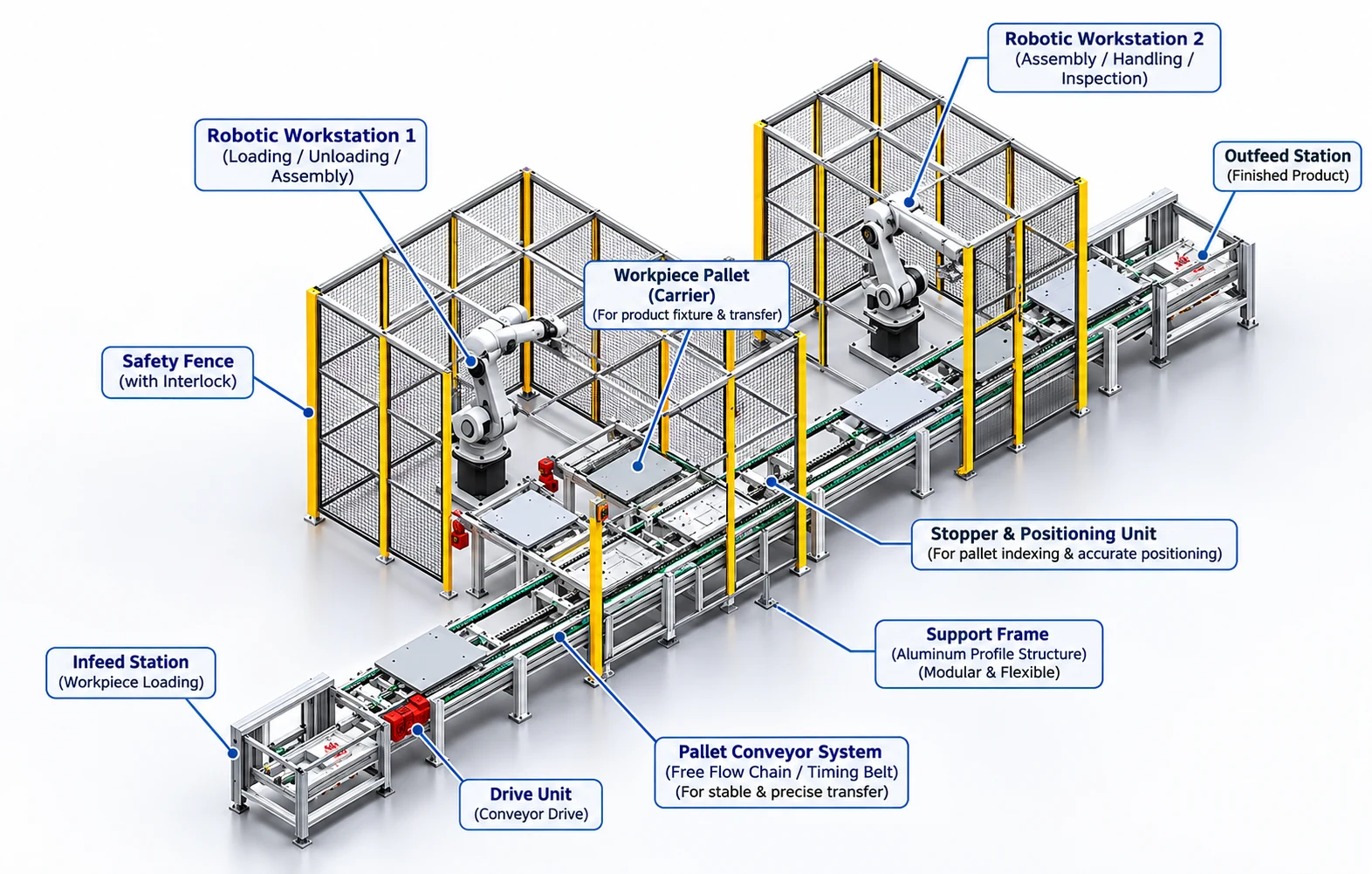
Conceptual 3D pallet conveyor production line with robotic workstations, safety fencing and carrier positioning stations
Conceptual 3D production line layout - not a verified customer installation.

LAYOUT ENGINEERING

Configure the Conveyor Around the Production Flow

Layout configuration depends on available floor space, workstation sequence, transfer direction, process requirements and return or circulation requirements.

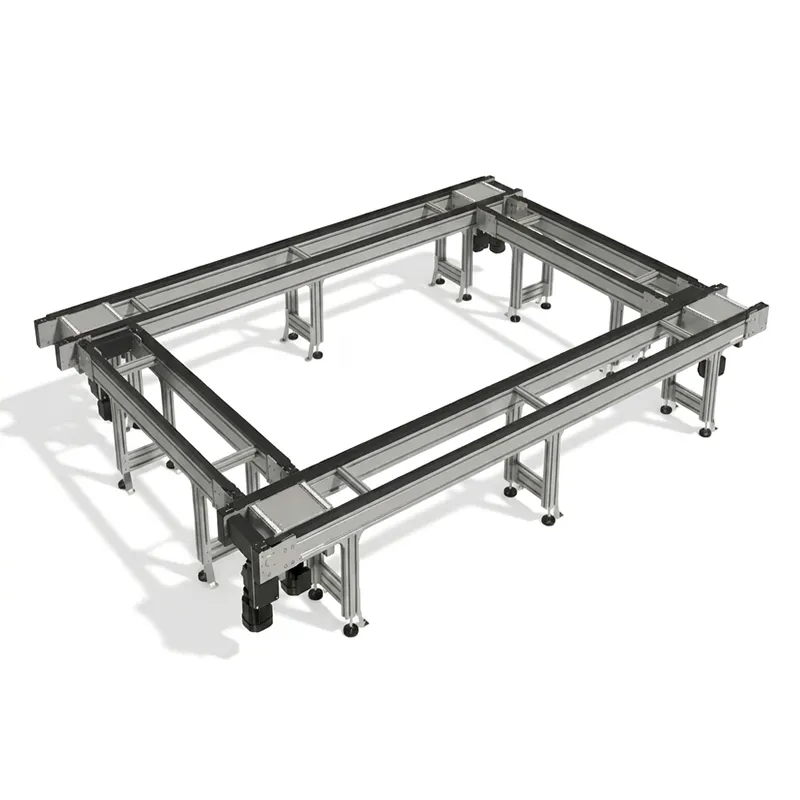
Conceptual horizontal pallet conveyor layout with a rectangular circulation route
Conceptual / reference layout — not a verified customer installation.

Horizontal Layout

Route pallets between workstations across one working level.

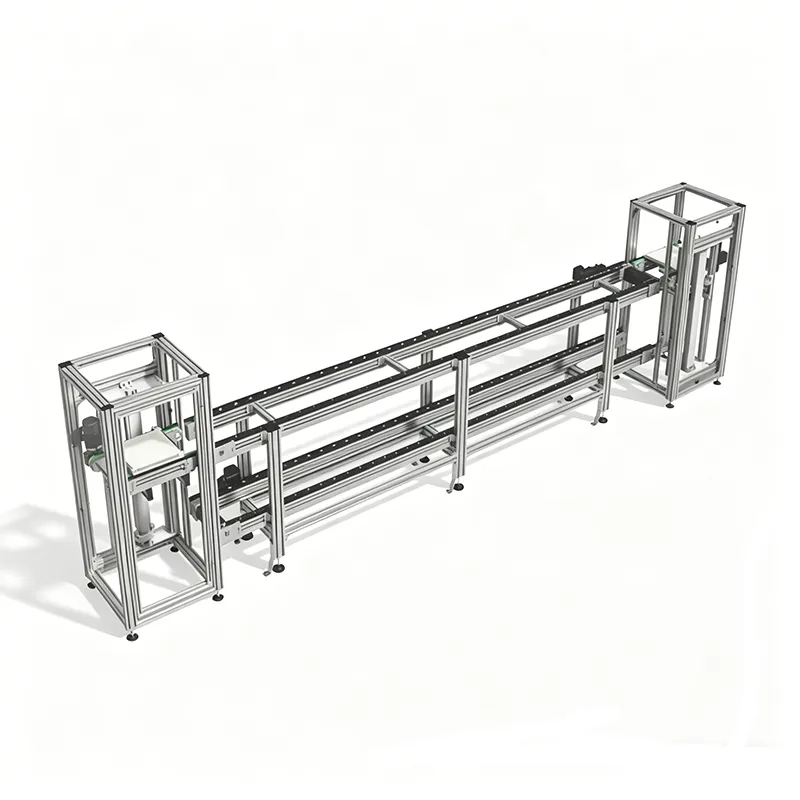
Conceptual multi-level pallet conveyor layout with stacked routes and end lifts
Conceptual / reference layout — not a verified customer installation.

Vertical / Multi-Level Layout

Evaluate working and return routes across more than one level.

Conceptual mixed pallet conveyor layout combining horizontal routes and vertical lifts
Conceptual / reference layout — not a verified customer installation.

Mixed Layout

Combine route directions and level changes around process equipment and available space.

TYPICAL APPLICATIONS

Pallet Conveyor Systems for Automated Production Processes

Pallet conveyor systems can be configured around different workpieces, process stations and material-flow requirements across automated production and assembly environments.

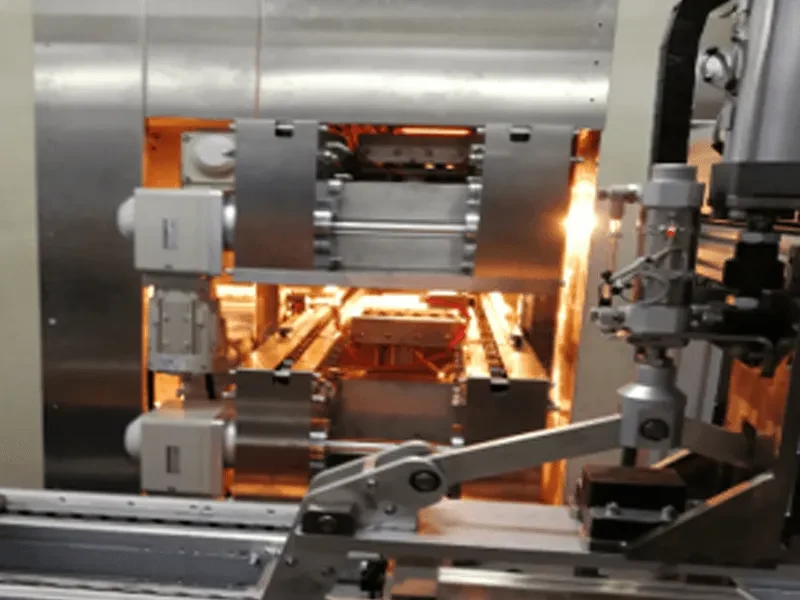
Automotive parts conveyor feeding a guarded processing station

Automotive Components

Component assembly, process transfer, inspection and testing stations.

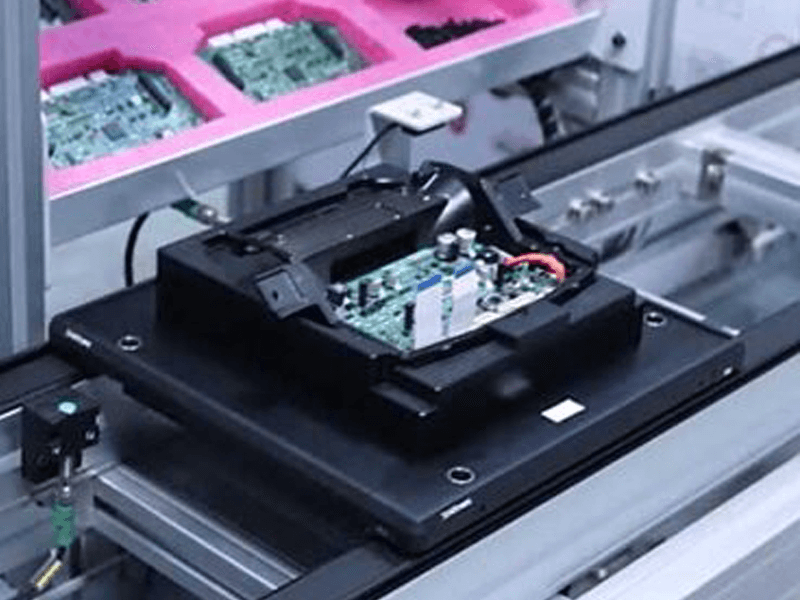
Circuit boards held in workpiece carriers on an electronics assembly conveyor

Electronics

Controlled workpiece movement between assembly, inspection and testing processes.

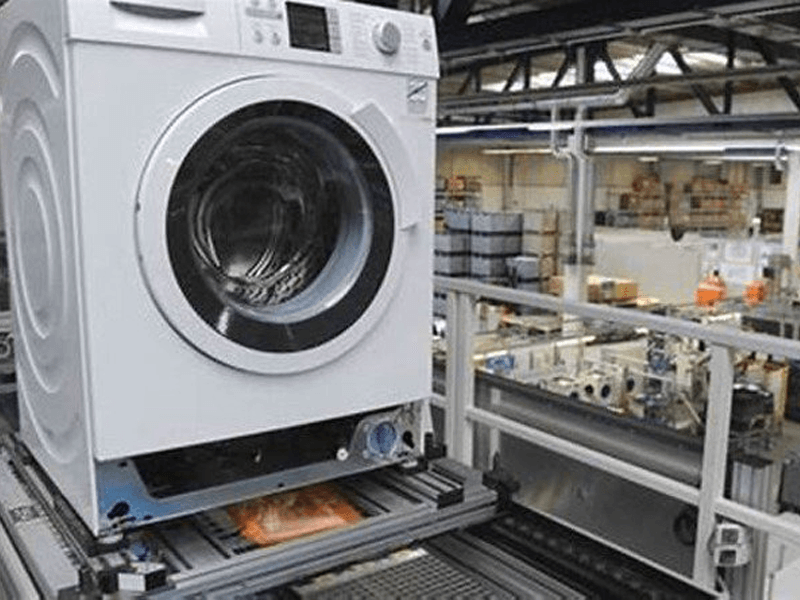
Washing machine supported on a conveyor during appliance assembly

Home Appliances

Assembly-line pallet transport between production and process stations.

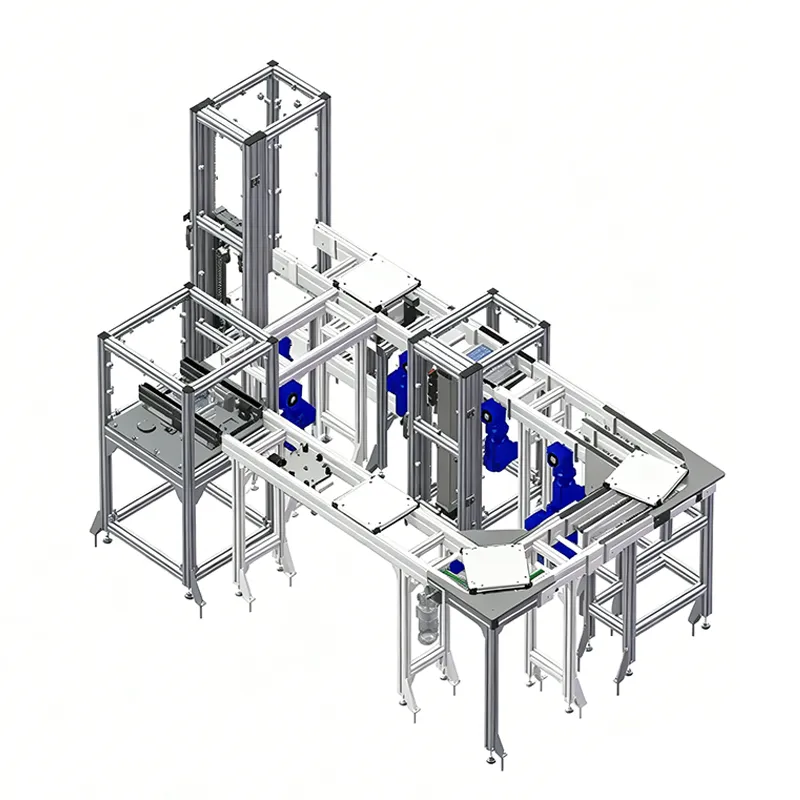
Industrial pallet conveyor installation with interconnected framed workstations

General Industrial Assembly

Workpiece-carrier transport for multi-station automated production processes.

ENGINEERED AROUND YOUR PROCESS

What We Need to Evaluate Your Pallet Conveyor Application

These inputs help structure an engineering discussion. Share what is available; open items can be reviewed together.

Workpiece

  • Dimensions
  • Weight
  • Orientation

Pallet / Carrier

  • Dimensions
  • Carrier concept, if defined

Production Process

  • Workstation sequence
  • Assembly / inspection / testing / processing requirements

Layout

  • Available production area
  • Conveyor routing
  • Required direction changes

Production Requirement

  • Required cycle time
  • Accumulation or buffering needs

Positioning

  • Process-station positioning requirements

Controls / Interface

  • Required machine or production-line interfaces
Start a Project Discussion

SELECTION SUPPORT

How to Start Selecting a Pallet Conveyor System

Select the conveyor platform from the application requirements rather than the product name alone. The workpiece, carrier, process and material flow should be evaluated together.

Discuss Your Application
  1. Workpiece & LoadConsider workpiece dimensions, weight and load distribution.
  2. Pallet / CarrierDefine pallet or workpiece-carrier dimensions and how the workpiece is supported.
  3. Production ProcessUnderstand the sequence of assembly, inspection, testing or processing stations.
  4. Material Flow & LayoutDefine straight transport, direction changes, circulation, return routes or multi-level movement.
  5. Transfer & Positioning FunctionsDetermine whether the system requires cross transfer, lifting, rotation, stopping or process-station positioning.
  6. Cycle Time & IntegrationConsider required production cycle time and interfaces with machines, stations or line controls.

ENGINEERING FAQS

Pallet Conveyor System FAQs

Concise answers for early platform and application evaluation.

What is a pallet conveyor system?

A pallet conveyor system moves workpieces on pallets or carriers between production stations. The conveyor platform and handling modules are configured around the carrier, process sequence and layout.

What is the difference between timing belt, chain and roller pallet conveyors?

The conveying methods provide different carrier-support and transport characteristics. Selection should consider the workpiece, pallet interface, route, operating conditions and station requirements rather than conveyor type alone.

How do I choose a pallet conveyor platform for an assembly line?

Start with the workpiece and carrier, then define the station sequence, layout, transfer directions, cycle requirement and positioning needs. These inputs allow the platform options to be evaluated qualitatively before specifications are confirmed.

Can transfer, positioning and lifting modules be integrated into the system?

These functions can be considered within a pallet handling configuration. Their suitability and interfaces depend on the carrier, process, route and required movement at each station.

What information is required to evaluate a custom pallet conveyor project?

Share workpiece and carrier dimensions and weight, process sequence, layout, cycle requirement, transfer directions, positioning needs, buffering needs and machine or line interfaces where available.

Can a pallet conveyor system be designed around an existing production-line layout?

An existing layout can be used as an engineering input. Equipment positions, available space, routes, access restrictions, transfer points and interface boundaries should be reviewed together.
PROJECT DISCUSSION

Planning a Pallet Conveyor System?

Share your workpiece, pallet/carrier information, production process and layout to start an engineering discussion.

  • Workpiece dimensions & weight
  • Pallet / carrier
  • Production layout
  • Cycle time
  • Transfer direction
  • Positioning requirements
  • Control / interface requirements
Prepare Your Project Inquiry

Share the available information below. Items that are still open can be reviewed during the engineering discussion.

  • Workpiece dimensions & weight
  • Pallet / carrier
  • Production layout
  • Cycle time
  • Transfer direction
  • Positioning requirements
  • Control / interface requirements

Send your requirements to info@sytoshine.com or visit our contact page. Online form submissions are not yet enabled.